


By Gaming Industry Correspondent
The independent game development landscape is defined by its diversity, ingenuity, and the precarious financial tightrope walked by its creators. In an effort to bolster this community, the leading digital storefront for independent titles, itch.io, has officially announced the return of its highly anticipated "Creator Day." Scheduled for Friday, August 25th, this event represents more than just a promotional window; it serves as a structural intervention aimed at maximizing revenue for developers during a challenging economic climate for the gaming industry.
Main Facts: A Zero-Commission Initiative
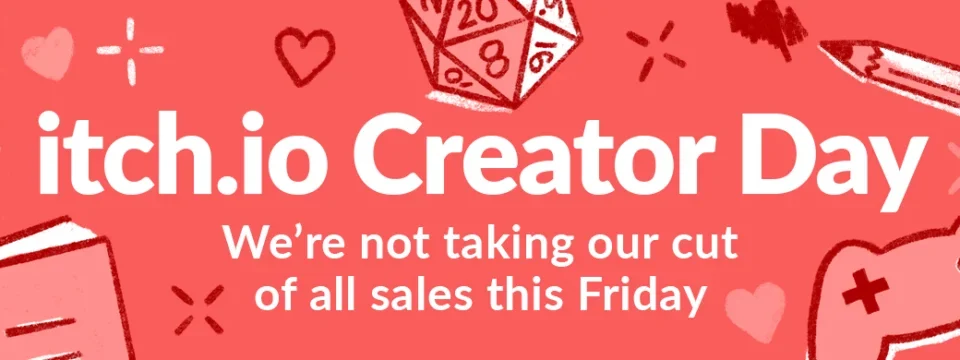
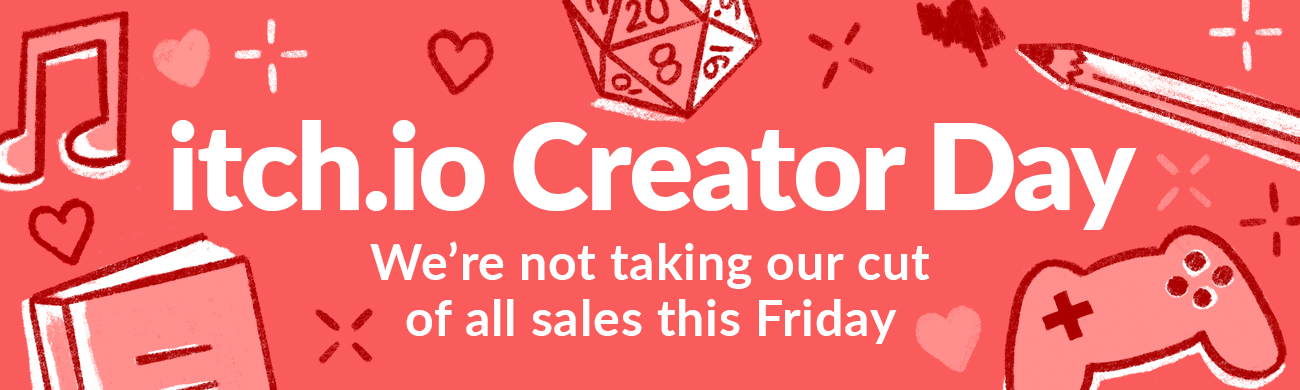
The core premise of itch.io’s Creator Day is simple but impactful: for the duration of a single 24-hour cycle—specifically from midnight to midnight Pacific Time—the platform waives its revenue share entirely. In standard operations, itch.io allows creators to set their own revenue split, but during Creator Day, the platform takes zero percent of all sales generated on the site.
This move effectively ensures that every dollar spent by a player goes directly into the pockets of the developers, artists, and sound designers who built the products. By removing the middleman fee, the platform empowers creators to retain 100% of their earnings, providing a significant boost to small teams and solo developers who often operate on razor-thin margins.
Alongside the commission waiver, itch.io is facilitating a sitewide sale, encouraging users to purchase titles at a discount while ensuring the developer receives the full benefit of those transactions. The platform has been careful to manage expectations, noting that standard revenue-sharing models will automatically resume once the clock strikes midnight on Saturday, August 26th.
Chronology: The Evolution of a Community Staple
To understand the significance of the upcoming August 25th event, one must look at the history of itch.io’s community-centric initiatives. Since its inception, itch.io has distinguished itself from major competitors like Steam or the Epic Games Store by fostering a more intimate, creator-first environment.
The "Creator Day" initiative emerged during the height of the global pandemic. In 2020, as the world moved into lockdown and traditional revenue streams for indie developers faced uncertainty, itch.io launched several initiatives, most notably the "Bundle for Racial Justice and Equality," which raised millions of dollars for charity. Following that success, the platform began experimenting with Creator Days as a recurring mechanism to provide direct financial relief to its user base.
The hiatus leading up to this August event has been marked by a growing clamor from the community. After a period of relative silence regarding these specific promotional days, the announcement has been met with significant enthusiasm, signaling that the "drought," as referred to by the itch.io team, has finally ended.
Supporting Data: The Economics of Indie Development
The impact of a single day without platform fees may seem negligible to a casual observer, but for the micro-studio or the solo developer, it represents a tangible shift in sustainability.
According to industry reports, independent developers frequently struggle with "discoverability" and "monetization volatility." While platforms like itch.io provide the infrastructure for hosting and distribution, the cost of doing business—including platform fees, payment processing, and marketing—can consume a substantial portion of a developer’s gross revenue.
Consider the following factors:
- Direct Support: By eliminating the platform cut, a developer selling a $10 game earns an additional $0.50 to $1.00 per unit depending on standard platform overheads. When scaled across hundreds or thousands of sales, this creates a meaningful buffer for development costs, server maintenance, and living expenses.
- The Multiplier Effect: The inclusion of a sitewide sale creates a "call to action" for consumers. Historical data from previous Creator Days suggests a sharp spike in traffic to the site, which benefits not only those with discounted titles but also those who gain visibility through the increased site-wide engagement.
- Community Retention: Data shows that indie players are highly motivated by the knowledge that their money is going directly to the creators. This psychological factor—the "support the dev" mentality—often drives higher conversion rates than standard seasonal sales on larger, more corporate-led platforms.
Official Responses and Developer Sentiment
The announcement has triggered a wave of positive feedback from the developer community. Many creators have taken to the itch.io forums to express their gratitude, noting that these days serve as a lifeline for those who are currently in the middle of development cycles for upcoming projects.
"I am utterly speechless in expressing my heartfelt gratitude to itch.io," wrote one developer, reflecting a sentiment shared by many who utilize the platform as their primary source of income.
Several developers have leveraged the announcement to highlight their own upcoming projects. For instance, creators of horror-themed games have begun coordinating their updates to coincide with the event. By aligning new patches, content updates, and discount windows with the August 25th date, these developers are attempting to maximize their exposure during the platform’s peak traffic hours.
The developer of Midnight Monitor, an anomaly-reporting game, confirmed they would be offering a 50% discount during the event. This strategy—combining a promotional price with a platform-wide spotlight—is a classic example of how developers are using the Creator Day to break through the noise of the crowded digital marketplace.
Implications: The Future of Platform-Developer Relations
The success and frequency of itch.io’s Creator Day raise important questions about the broader gaming industry. While it is unlikely that larger, publicly traded storefronts will adopt a "zero-commission" model due to shareholder requirements and massive operational overheads, the itch.io model provides a blueprint for what a sustainable, community-first ecosystem looks like.
1. The Power of "Ethical Consumption" in Gaming
The enthusiastic response from the player base suggests that there is a significant demographic of gamers who are actively interested in the ethics of their purchases. By highlighting when and how developers get paid, itch.io has turned a transaction into an act of patronage. This shift in consumer behavior could force other platforms to be more transparent about their revenue splits and creator support programs.
2. A Shift in Marketing Strategy
For indie developers, the reliance on massive, platform-wide sales events is becoming increasingly difficult. The "Creator Day" model allows for a more focused, high-intensity marketing window. Developers are learning to treat these 24-hour periods as "mini-launches," where they concentrate their social media efforts and community outreach. This allows for a more efficient use of limited marketing budgets.
3. Sustainability vs. Scalability
The question remains whether this model is sustainable for the platform itself in the long term. By waiving fees, itch.io loses potential revenue that would otherwise go toward server costs, site security, and development of new features. However, by fostering a loyal, thriving community of creators, the platform ensures long-term retention. Developers who feel supported by their storefront are more likely to stay loyal to that platform, creating a virtuous cycle of content creation and consumption.
Conclusion: Marking the Calendar
As the gaming community prepares for Friday, August 25th, the focus remains on the intersection of commerce and creativity. For the average player, it is an opportunity to pick up hidden gems, experimental horror titles, and avant-garde art games at a lower cost, all while knowing that their contribution is providing direct, unadulterated support to the people behind the screen.
For the indie developer, it is a rare moment of alignment where their hard work is met with the maximum possible reward. Whether the game is a polished commercial product or an experimental "anomaly reporting" project, August 25th stands as a testament to the fact that the independent spirit of gaming is not just about the code—it is about the community that sustains it.
As we look toward the future, the success of itch.io’s Creator Day serves as a reminder that in an industry often dominated by massive conglomerates and recurring subscription models, the most powerful innovations can sometimes come from simply ensuring the creator is paid fairly for their craft.
Interested users are encouraged to browse the itch.io catalog ahead of time to build their wishlists, as the 24-hour window moves quickly. Keep an eye on the platform’s blog and social media channels for further updates as the Friday deadline approaches.
